Solution
Adherence as a behavioural signal
Adherence is often treated as a compliance metric but really it reflects behavioural continuity across time. It is shaped by fluctuating psychological, practical and contextual influences. These influences are dynamic and individual. Understanding adherence requires structured observation of behaviour and not only measurement of isolated events.
Closing the visibility gap
Healthcare systems lack structured visibility into how engagement evolves before visible decline occurs. Most digital tools focus primarily on prompting action, like reminders to take medication. Few provide longitudinal insight into behavioural trajectory.
Qlic addresses this gap.
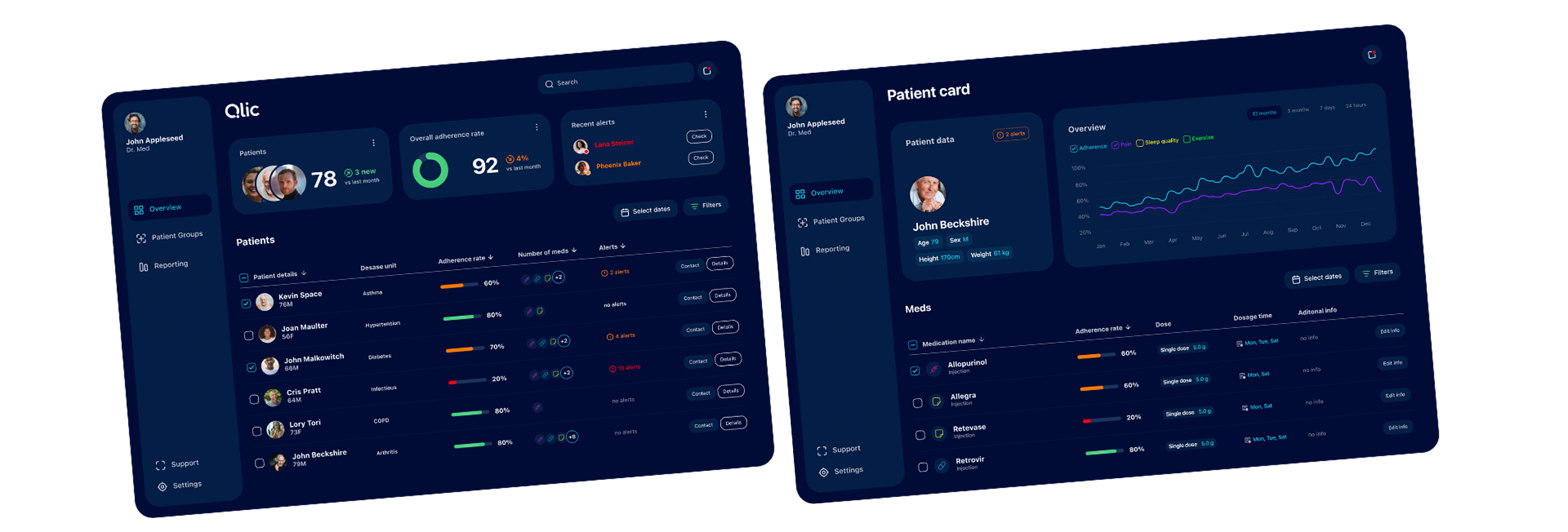
By capturing structured patient interaction data such as medication confirmation, well-being indicators and therapy related side effects, Qlic can generate a behavioural timeline for each user.
This timeline shows how engagement changes over time and whether it remains consistent, begins to fluctuate or starts to weaken.


Shared visibility between patients and care teams
Effective adherence support requires more than reminders. It requires structured participation. Patients generate valuable behavioural data signals through everyday interaction with the system such as confirming intake of medication, well-being and therapy experiences. When these inputs are captured over time, patterns emerge which can create a view of patient engagement over time.
For patients this means clearer insight into their own patterns.
For care teams, it means earlier understanding of when additional support or interventions may be needed.
Technology becomes the medium through which behavioural continuity is observed.
Closing the visibility gap
Healthcare systems lack structured visibility into how engagement evolves before visible decline occurs. Most digital tools focus primarily on prompting action, like reminders to take medication. Few provide longitudinal insight into behavioural trajectory.
Qlic addresses this gap.
By capturing structured patient interaction data such as medication confirmation, well-being indicators and therapy related side effects, Qlic can generate a behavioural timeline for each user.
This timeline shows how engagement changes over time and whether it remains consistent, begins to fluctuate or starts to weaken.
Shared visibility between patients and care teams
Effective adherence support requires more than reminders. It requires structured participation. Patients generate valuable behavioural data signals through everyday interaction with the system such as confirming intake of medication, well-being and therapy experiences. When these inputs are captured over time, patterns emerge which can create a view of patient engagement over time.
For patients this means clearer insight into their own patterns.
For care teams, it means earlier understanding of when additional support or interventions may be needed.
Technology becomes the medium through which behavioural continuity is observed.
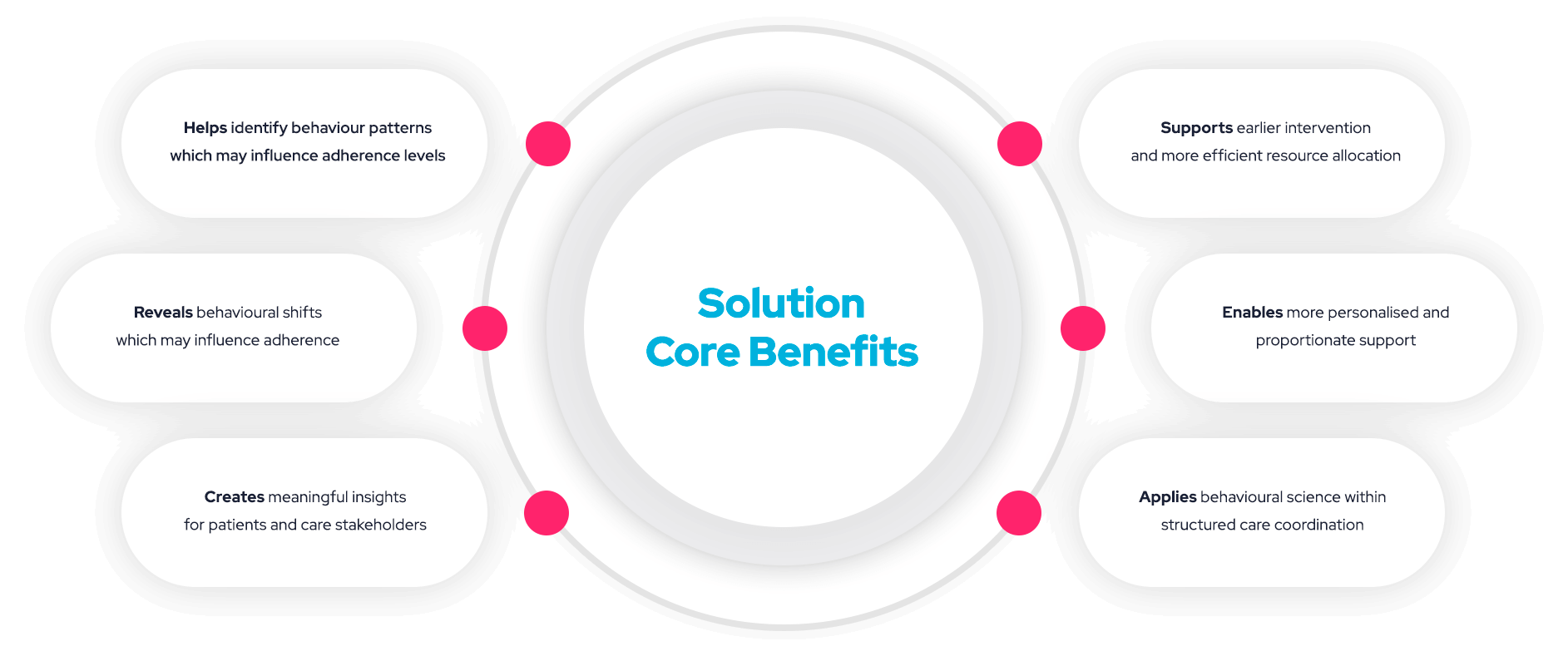
Core System Benefits
Qlic creates structured visibility into patient engagement, supporting better coordination between patients, care teams and healthcare systems.